UNDERSTANDING DARK HERITAGE: memory, silence and resilience in contemporary Asia
By Xhesjana Haxhiu and Giordana Scotto Di Perta
In societies across Asia, the question of what gets remembered and what gets erased carries profound political weight. From Japan’s post-disaster recovery sites to the evolving narratives of China’s war museums, from Singapore’s colonial cemeteries to Thailand’s suppressed massacre, the struggle over memory continues to shape identities, power dynamics, and possibilities of justice.
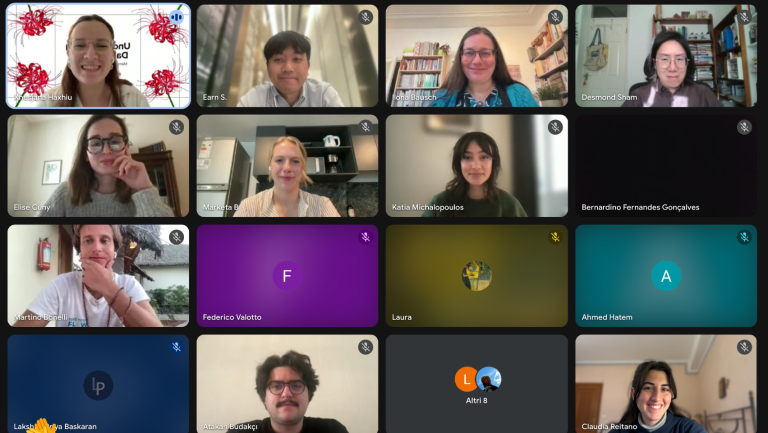
On January 20th, Echoes Cooperation’s Asia Team hosted an online dialogue trying to explore these contested narratives. “Understanding Dark Heritage: Memory, Silence and Resilience in Contemporary Asia” gathered four distinguished experts in heritage studies, cultural studies, political science, and human rights activism to present relevant case studies.
The 90-minute session drew 39 participants from around the world, including scholars, heritage aficionados, students and volunteers, all seeking to understand how marginalized groups can reclaim their erased histories and how new generations are challenging official silences. With a retention rate of nearly 80%, the session maintained strong engagement throughout its duration.
Unearthing Hidden Narratives
The dialogue revealed the deeply political nature of heritage and remembrance work across East and Southeast Asia.
Dr. Ilona Bausch, Professor of Archaeology, Art and Heritage of Japan and East Asia and affiliated with the Leiden
Institute of Area Studies, shared one of her recent studies on how prehistoric Jomon archaeological sites inMinamisoma, Fukushima became, unexpectedly, a space of healing following the 2011 triple disaster (earthquake, tsunami & nuclear accident). Her research emphasized that inclusive, community-led projects and multisensory heritage practices, engaging local residents, children and people with disabilities, can foster collective resilience in the aftermath of trauma.
Dr. Markéta Bajgerová Verly, a Postdoctoral Researcher at the Institute of Culture Studies at the Austrian Academy of Sciences, traced how China’s World War II museums have transformed over seven decades. From Mao-era communist heroism to narratives of victimhood and national humiliation, and now to Xi Jinping’s vision of victory and “national rejuvenation”, she exposed how museum storytelling serves shifting political agendas and increasingly extends China’s memory politics onto the global stage.
Dr. Desmond Hok-Man Sham, Assistant Professor in Cultural and Creative Industries at the University of Nottingham, turned attention to a lesser-known case study: Japanese war cemeteries in Singapore. In an exclusive preview of his ongoing, yet-to-be-published research, he shed light on the complex questions of responsibility and reconciliation that arise from intra-Asian colonialism, a dimension often overshadowed in heritage discourse by Western colonial narratives.
Finally, Mr. Earn Sataphat Silsawang, Senior Policy Advocacy Officer at Amnesty International Thailand, connected
contemporary youth activism to decades of official silence. Drawing on his firsthand experience with the 2020-2021 Thai student protest, he showed how young activists are reclaiming suppressed memories, including the 1976 Thammasat University Massacre, through creative protest, commemorative acts, and digital mobilization.
Reclaiming Forgotten Voices
Throughout the dialogue, moderated by Xhesjana Haxhiu, Projects Officer for Echoes Cooperation’s Asia Team, a unifying theme emerged: heritage is never neutral. Whether expressed through grassroots memorialization, museum curation or street protests, acts of remembrance are inherently political, capable of reinforcing dominant power structures or, alternatively, creating space for healing and justice.
Participants grappled with pressing questions around ethical representation, the tension between state narratives and community memory, and the transformative potential of digital and performative tools in memorial work. The geographical and disciplinary diversity in the virtual room enriched these conversations, offering comparative insights that transcended national boundaries.
Several key insights emerged: community participation is essential for meaningful memorialization; when heritage practices center local voices and diverse experiences, they encourage genuine resilience and healing, instead of imposing top-down narratives. Critically, the dialogue itself revealed that silence is itself a form of heritage, one that younger generations are increasingly refusing to accept. Finally, new forms of remembrance are challenging official narratives and refusing to let difficult histories remain buried.
The event also left participants with critical questions to consider: How do we balance the need for collective healing with the imperative of historical accountability? And whose voices are still missing from heritage narratives in our own contexts?
As societies across Asia continue to negotiate their difficult pasts, dialogues like this one demonstrate how scholars, activists and communities can work together to ensure that silenced voices are heard, marginalized histories are honored, and memory serves not just power, but truth and reconciliation.